
|
|
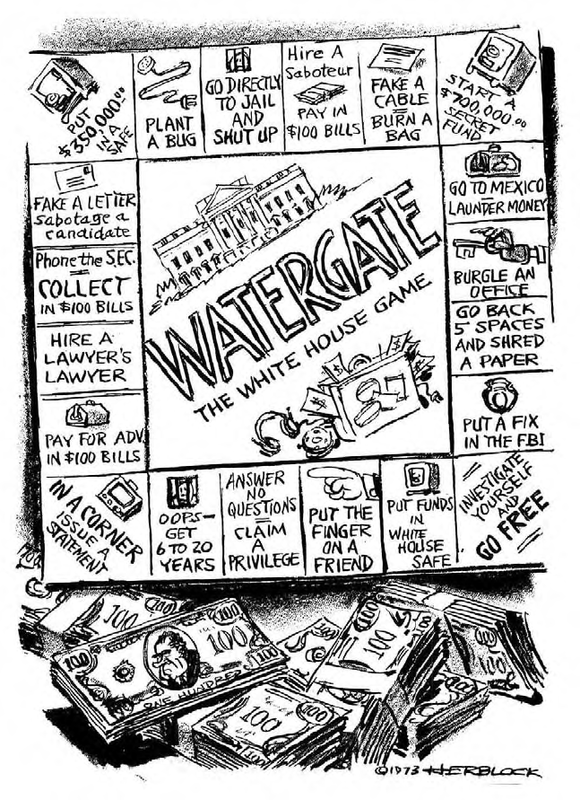
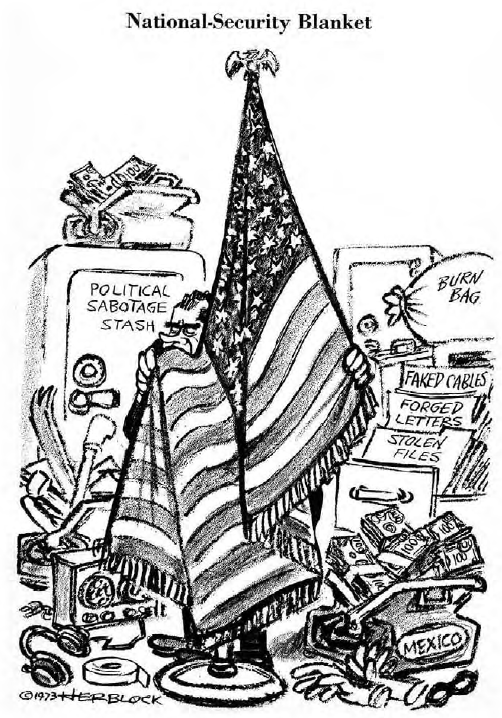
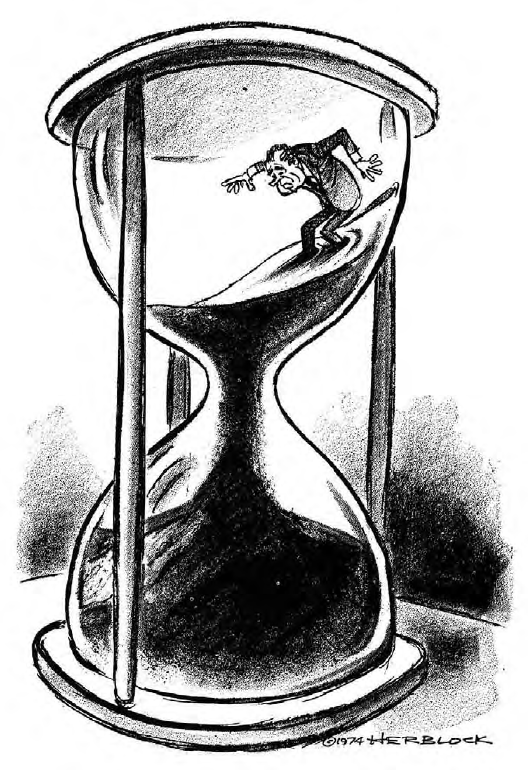
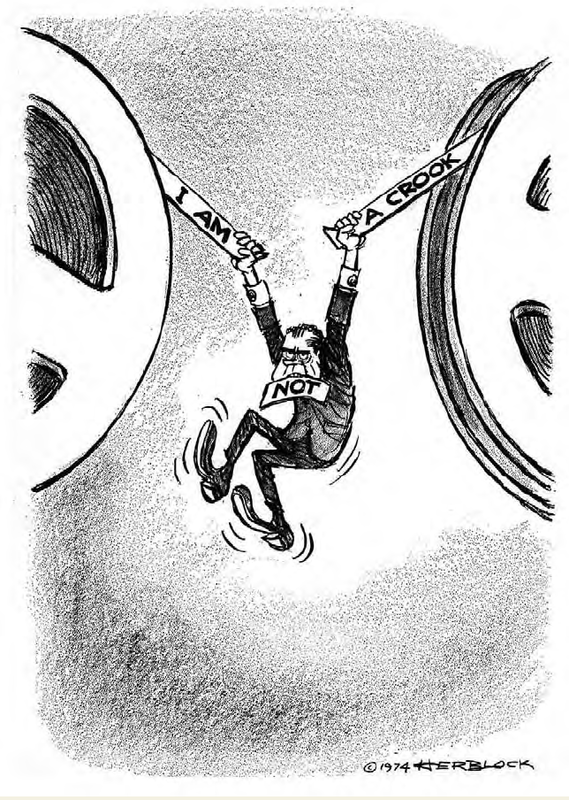
From the early years, Herblock was suspicious of Richard Nixon. Put off by the senator’s party politics, he followed Nixon from the 50s to the infamous Watergate scandal. His cartoons portrayed the ordeal for transparency - the chaos surrounding the senator's shady dealings, the undeserved respect for Nixon, and the lack of justice in punishment. There was something profound about visually portraying Nixon slipping through the sand of time, as opposed to reading yet another article on the scandal. It is more harrowing to see the lady of law being kidnapped and "executed" as opposed to another headline claiming his crimes. The cartoonist bravely criticized the popular senator, and felt responsible to show how Nixon overstepped his rights.
|
|
"HBO's new documentary "Herblock - The Black & The White" chronicles the life of Herbert Block, one of the country's greatest editorial cartoonists. The film's producer joins HuffPost Live to discuss the legendary Pulitzer Prize winner." [3]
|
Navigation in bottom right-hand corner
Click to zoom for Herblock's original work |
"Within days of the June 17, 1972, break-in at the Democratic National Committee headquarters in the Watergate Hotel in Washington, D.C., Herblock pointed his finger at Richard Nixon, proving that cartoonists have more flexibility than other journalists. He beat Bob Woodward and Carl Bernstein’s October 10, 1972, exposé of the break-in by almost four months. In 1973, Bob Woodward, Carl Bernstein, Herb Block, and their editor, Roger Wilkins, shared a Pulitzer Prize for exposing the Watergate story."
Image and caption courtesy of the Prints and Photographs Division, Library of Congress June 23, 1972
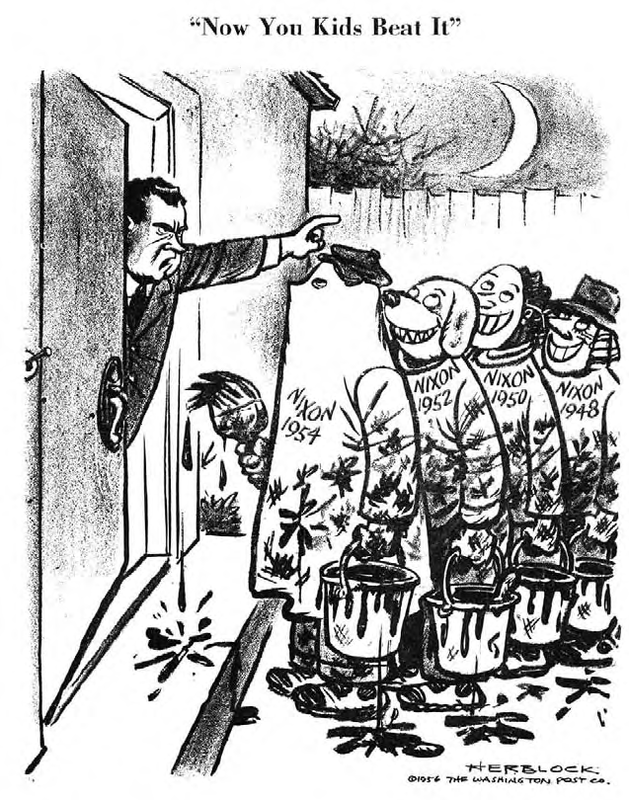
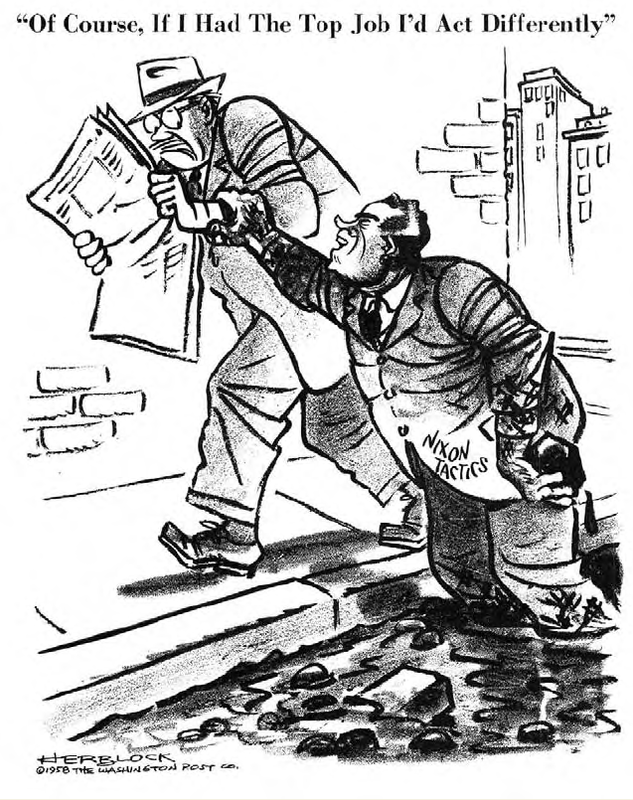
“Nixon said in 1960 when he ran for the U.S. presidency he was still working to erase the Herblock image.” Herblock had a definite impact on Nixon himself. The criticism from Herblock and the liberal press, "upset him [Nixon] so much so that in September, he thought of seriously leaving the political area: '...I resented being constantly vilified as a demagogue or liar or as the sewer dwelling denizen of the Herblock cartoons.'" Herblock was responsible for a fearless liberal media, one that brought the truth about whomever deserved it. [3]
|
|
Cartoons courtesy of The Herb Block Foundation
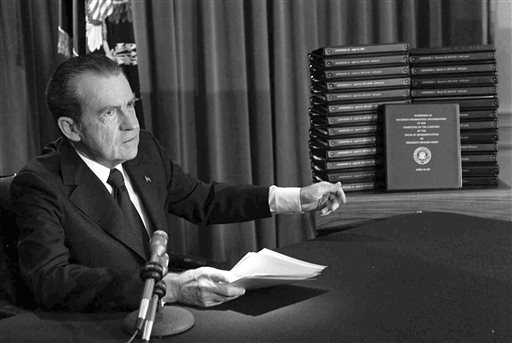
Photographs courtesy of Associated Press
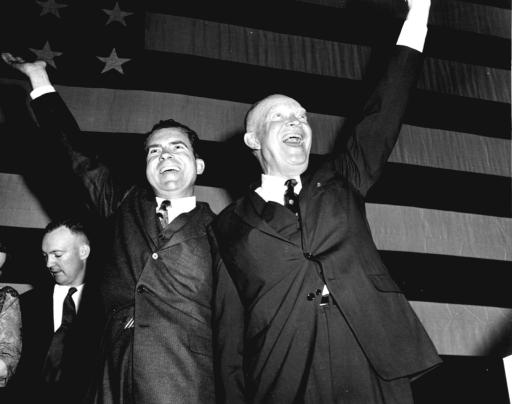
Photographs courtesy of Associated Press