

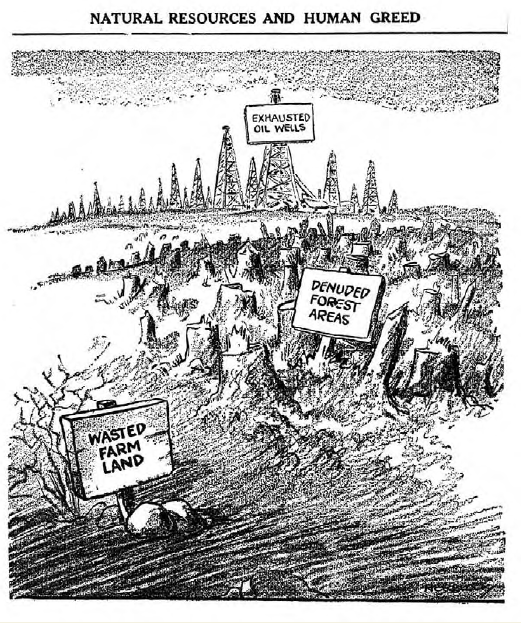
April 2, 1935
|
At a time when environmental issues were unpopular, Herblock was the frontrunner in illustrating the importance of our impact on nature. His coverage of pollution in the Great Lakes helped lead to the Clean Water Act of 1972. Rather than just describing the impact of corporations on forests, he depicted the scant and pitiful stubs of trees - a clear visual impact for the reader. His cartoons on this overlooked problem demonstrated his strong intuition to recognize significant issues.
|
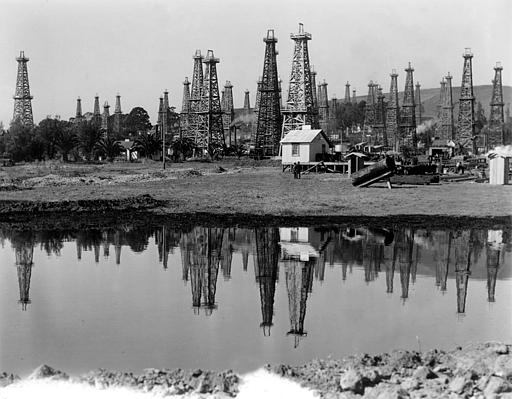
"In Santa Barbara, Ca., on Dec. 12, 1935... an untested area of the field undergoing a boom, the well blew in out of control, gushing a thousand gallons of oil an hour for 12 hours and drenching a half-mile area before workmen succeeded in capping it." (AP Photo)
|
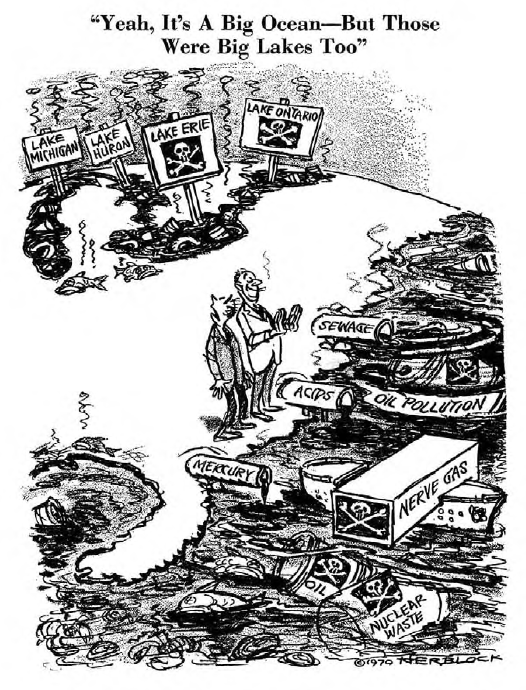
"The national media focused its attention on pollution in the Great Lakes following the June 22, 1969 fire on the Cuyahoga river in downtown Cleveland, Ohio…oil slicks, debris and trash along with hazardous waste killed all fish life…"
|
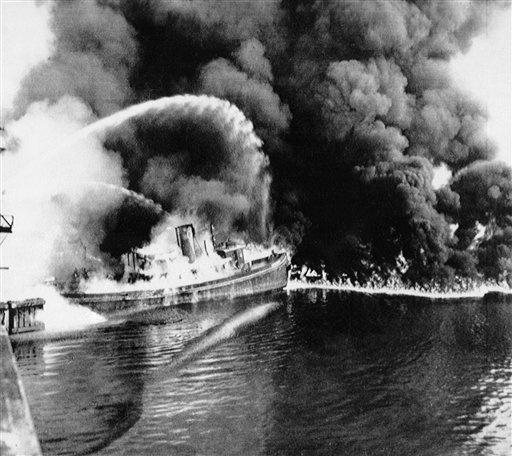
"A fire tug fights flames on the Cuyahoga River near downtown Cleveland, Ohio, where oil and other industrial wastes caught fire..." (AP Photo)
|
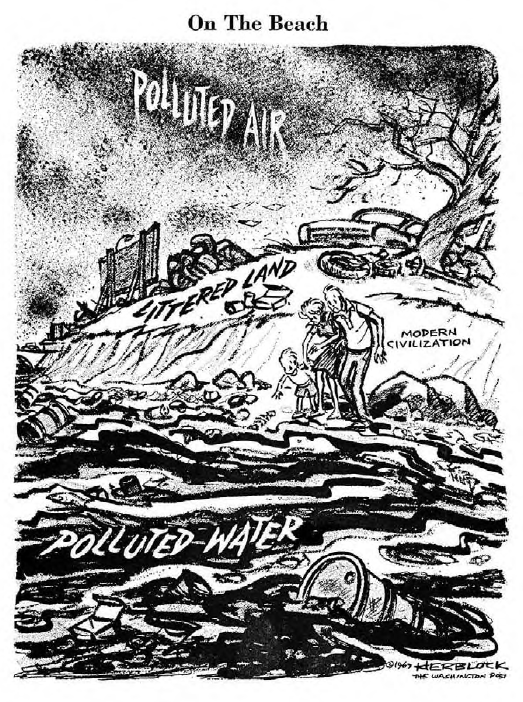
"“Herblock turns to Nevil Shute’s 1959 novel ‘On The Beach’ for an appropriate vision of America overcome by pollution and decay in the 1960s.”
|
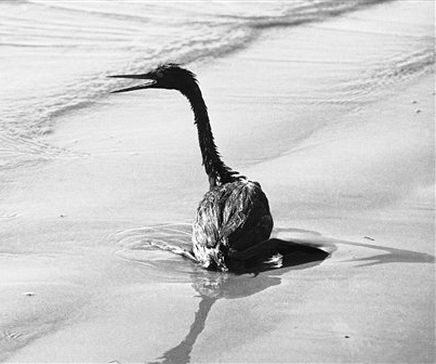
"In this April 11, 1969, file photo, a Grebe in seen on a beach in Santa Barbara, Calif. The magnitude of the current Gulf oil spill far exceeds Santa Barbara's spill of up to 100,000 barrels, but there hasn't been a comparable societal transformation." (AP Photo)
|
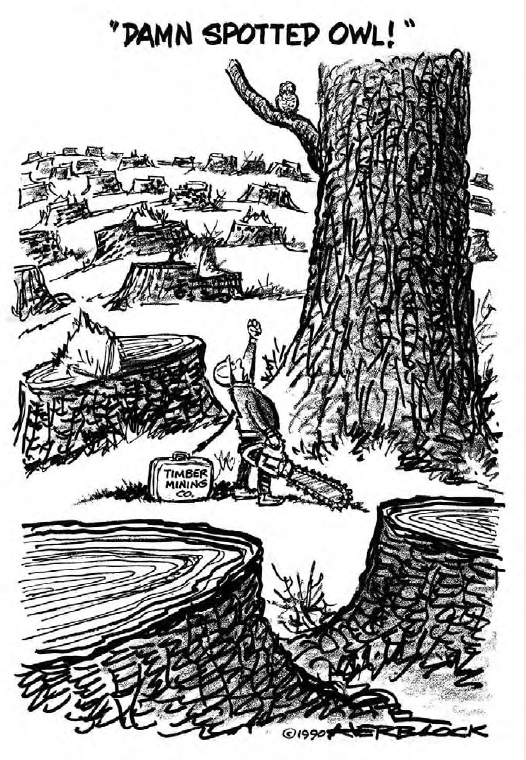
"“The northern spotted owl, a dark brown bird with white spots, makes its home in the Pacific Northwest forests of old-growth cedars, firs, hemlocks, and spruces which are a primary source of timber for the logging industry. Heavy logging has severely reduced these forests and the spotted owl’s natural habitat.”
|
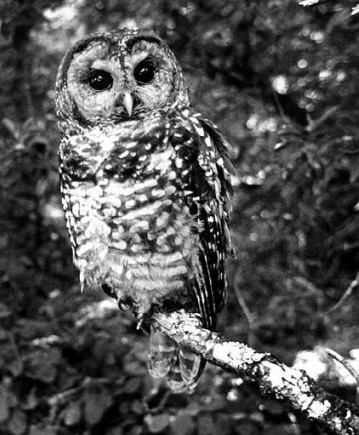
"The U.S. Fish and Wildlife Service has selected two outside consultants to help determine whether the northern spotted owl and marbled murrelet should keep their federal protection as threatened species." (AP Photo)
|
Cartoons courtesy of The Herb Block Foundation
Photographs courtesy of Associated Press
Photographs courtesy of Associated Press